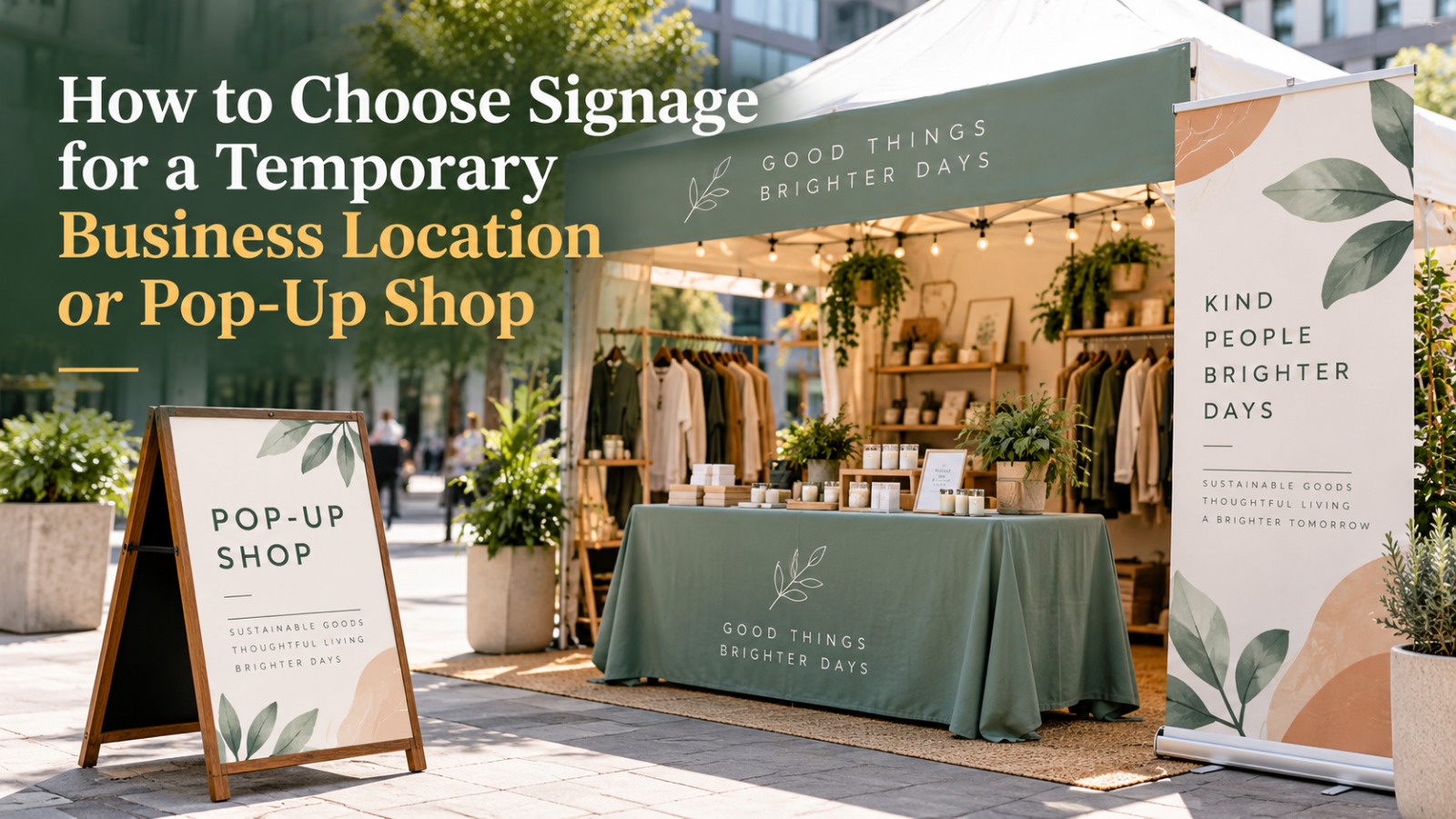
Opening a pop-up shop, setting up a trade-show booth, running a seasonal promotion, or operating from a temporary business location requires careful planning. Along with products, displays, and staffing, you need signage that helps customers identify your business and understand what you offer.
Unlike permanent signs, temporary business signage should be easy to transport, install, remove, and reuse wherever possible. Choosing the right solution can help you maintain a professional appearance without investing in signage you may only need for a short period.
In this guide, we’ll explain how to choose temporary business signage for pop-up shops, seasonal businesses, events, and short-term commercial spaces.
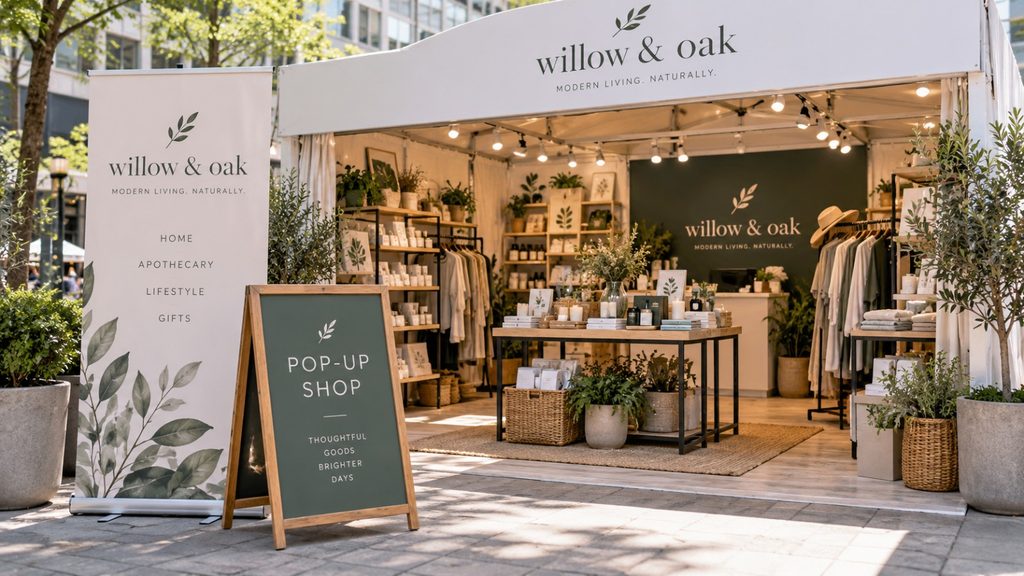
1. Identify the Purpose of Your Temporary Signage
Before choosing a sign, consider what you need it to accomplish. A sign designed to attract people from a distance may be different from one used to display product details or direct visitors inside.
For example:
- Pop-up shops: Display your business name, logo, and key products.
- Trade shows: Help visitors identify your booth and understand your services.
- Seasonal promotions: Highlight limited-time offers and featured products.
- Temporary business locations: Tell customers where to find you during renovations or relocation.
- Community events: Make your booth or service area easy to recognize.
Defining your primary goal makes it easier to select a suitable sign format, size, and message.
2. Choose Portable and Easy-to-Install Signs
Temporary locations often have limited installation time and restrictions on drilling, mounting, or making permanent changes to a property.
Portable signage can be useful in these situations. Depending on the location and purpose, options may include freestanding displays, banners, removable graphics, and lightweight promotional signs.
Before selecting a design, consider how frequently you’ll move the sign, how much space is available, and whether the venue allows the proposed installation method.
Explore custom signs for businesses to consider signage options suited to your display requirements and brand identity.
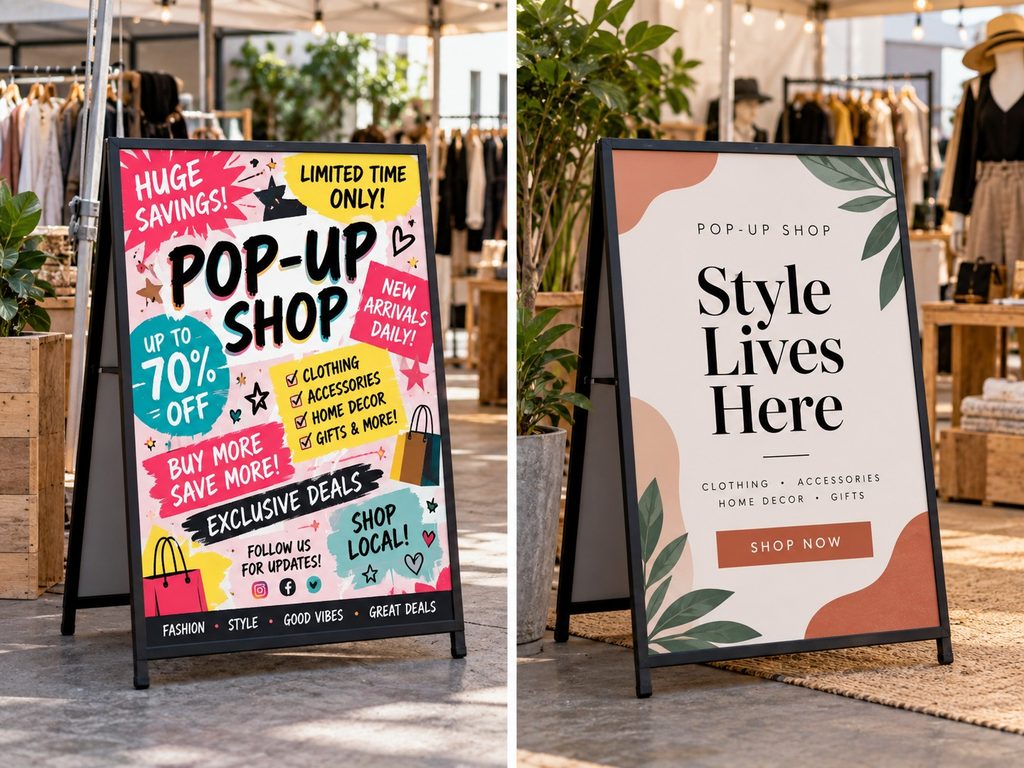
3. Make Your Message Easy to Read
Temporary signage often competes with other displays, promotional materials, and activity in a busy environment. A clear message helps people understand your business quickly.
Follow these design principles:
- Display your business name or logo prominently.
- Use readable fonts and appropriate text sizes.
- Maintain strong contrast between text and background.
- Keep the main message short and relevant.
- Avoid overcrowding the sign with too many offers or details.
For example, a pop-up shop could use its main sign to display the brand name, while a separate promotional display highlights a seasonal offer.
4. Consider Weather and the Installation Environment
The right material depends on where your sign will be used.
An indoor trade-show booth may require different materials from an outdoor market stall or a temporary roadside location. Outdoor signage may need to withstand wind, moisture, sunlight, and changing temperatures.
Before ordering, assess:
- Whether the sign will be used indoors or outdoors
- The expected duration of use
- Exposure to rain, wind, and direct sunlight
- Available mounting or support options
- Venue rules and any applicable local requirements
Do not assume that every portable sign is suitable for outdoor use. Check the material, construction, and installation recommendations for your specific setting.
5. Choose Signs You Can Reuse
If your business participates in multiple events or runs seasonal campaigns, reusable signage may offer better long-term value than a sign designed for a single occasion.
Consider using a permanent brand display for your business name and logo, then adding separate promotional materials that can be changed for each event.
For instance, a retailer could reuse its main branded display throughout the year while updating smaller signs for holiday sales, product launches, or special offers.
When planning a reusable sign, avoid placing dates, temporary prices, or event-specific messages on the main display unless you can update them easily.
6. Match Temporary Signage to Your Brand
A temporary location should still look like part of your business. Using consistent colours, logos, fonts, and messaging helps customers recognize your brand across different events and locations.
If your business already uses specific brand guidelines, apply them to your temporary displays as well. Consistency can help your booth or pop-up shop look more professional, even when the space is small or shared with other businesses.
You can review Signs Depot Cambridge’s sign production services when planning how your signage design will be produced for your intended use.
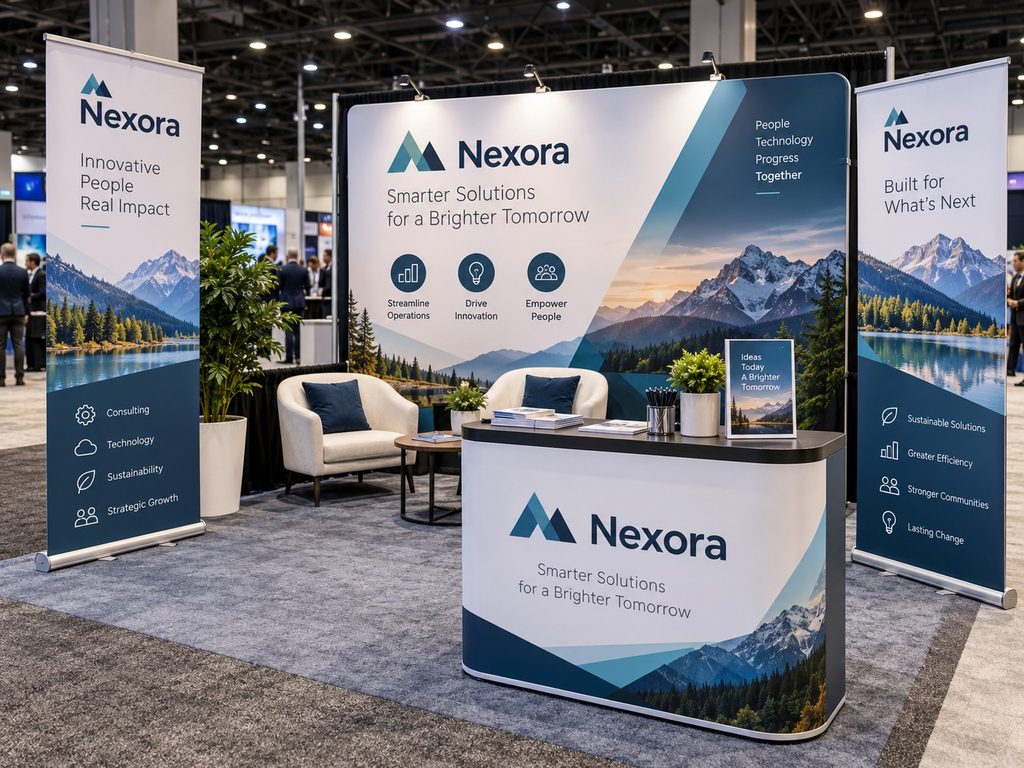
7. Plan for Storage, Transport, and Future Use
A temporary sign is only practical if you can move and store it safely between uses.
Before making a decision, check the sign’s dimensions, weight, packing requirements, and storage needs. Signs with delicate finishes or detachable components may require protective packaging.
If you plan to reuse the signage, keep the artwork files, colour specifications, and production details for future replacements or matching displays.
It is also worth considering whether the sign can be updated without replacing the entire structure. A modular design may make it easier to change promotional content while retaining the main branded elements.
8. Check Venue Rules Before Installation
Temporary does not automatically mean permit-free. Shopping centres, event organizers, landlords, and municipalities may have rules governing sign dimensions, placement, lighting, attachments, and outdoor displays.
Confirm the requirements before ordering or installing your signage. This is particularly important for signs placed outside a property, in shared walkways, or near roads.
Planning ahead can help you avoid last-minute changes, installation delays, and unnecessary expenses.
Choose Temporary Business Signage That Works for You
The best temporary business signage balances visibility, portability, durability, and brand consistency. By identifying your goals, choosing a suitable format, keeping your message clear, and planning for reuse, you can create a professional display for a pop-up shop, event, seasonal promotion, or short-term business location.
If you’re preparing for an upcoming event or temporary retail setup, explore custom signage solutions from Signs Depot Cambridge to discuss options that suit your business and display requirements.
Frequently Asked Questions
What is temporary business signage?
Temporary business signage is signage used for a limited period, such as during a promotion, pop-up shop, trade show, seasonal event, renovation, or temporary relocation.
Which signs are suitable for pop-up shops?
Depending on the venue, suitable options may include freestanding displays, banners, removable graphics, and portable branded signs. The best choice depends on available space, installation rules, and intended use.
Can temporary business signs be reused?
Yes. Signs designed with durable materials and reusable structures can often be used across multiple events. Keeping temporary offers separate from permanent branding can make updates easier.
Do temporary business signs require permits?
Requirements vary by location, property, sign type, and installation method. Check local regulations and obtain any required property-owner or event-organizer approval before installation.