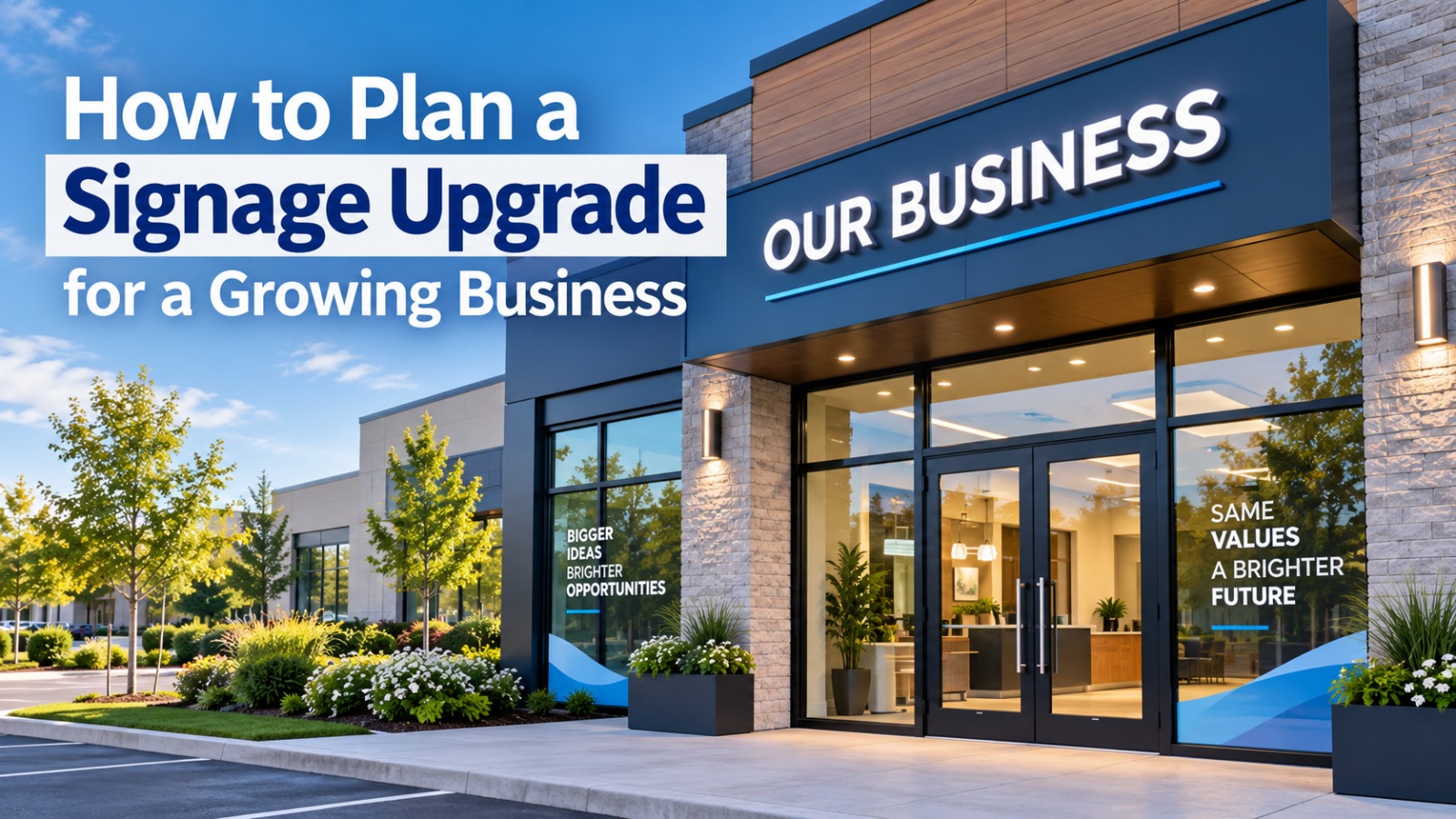
As your business grows, your signage needs may change too. You might be opening a new branch, expanding into a larger commercial space, adding new services, or updating an existing location to accommodate more customers.
Your current signs may no longer provide enough visibility, reflect your updated business operations, or help customers navigate your premises. Planning a signage upgrade can help you maintain a professional appearance while preparing your business for its next stage of growth.
In this guide, we’ll explain how to assess your existing signs, identify areas for improvement, and plan a signage upgrade that supports your business goals.
1. Assess Your Existing Signage
Before investing in new signs, review the signage you already have. Some signs may still be suitable, while others may need to be repaired, replaced, relocated, or redesigned.
Start by checking whether your existing signs are easy to read, in good condition, and appropriate for your current business operations.
Ask yourself:
- Can customers identify the business easily from outside?
- Does the signage reflect your current logo and branding?
- Are the signs visible from the main approach?
- Is any information outdated or misleading?
- Do customers have difficulty finding entrances, departments, or services?
Create an inventory of your existing signs and record which items need immediate attention. This gives you a clearer picture of the work involved before requesting quotes.
2. Identify What Has Changed as Your Business Grows
Business expansion often introduces new signage requirements.
For example, a company moving from a small office into a larger commercial unit may need a more prominent building sign, additional entrance identification, and signs for different departments.
A retailer opening another branch may need to maintain consistent branding across both locations. A business adding new services may need to update signs that no longer accurately describe what it offers.
Identify the changes that affect your customers most. Prioritizing these needs can help you make practical decisions about your signage investment.
3. Prioritize the Signs That Matter Most
Not every sign needs to be replaced at the same time. Focus first on the signs that affect business identification, customer access, safety, and day-to-day operations.
Consider prioritizing:
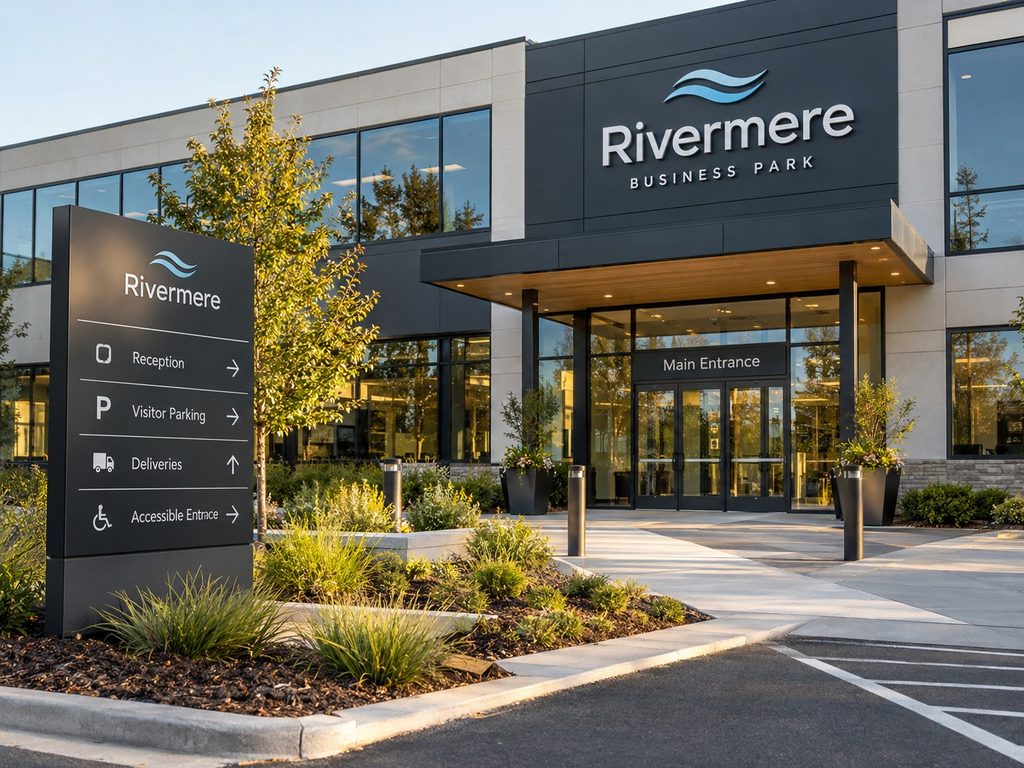
- Main building signs: Help customers identify your premises.
- Entrance signs: Make the correct entrance easy to recognize.
- Interior signs: Help visitors understand where to go.
- Service and department signs: Communicate the services available at your location.
- Outdated signs: Remove or update information that no longer reflects your business.
For a business moving into a larger property, building signs from Signs Depot Cambridge may be worth considering as part of the exterior signage plan.
4. Keep Your Branding Consistent
Growth often means introducing your business to new customers and locations. Consistent signage helps maintain a recognizable identity wherever customers encounter your company.
Use the same approved logo, brand colours, typography, and messaging across your exterior and interior signs. If you operate several locations, establish clear brand guidelines before ordering signage for each branch.
Consistency does not mean every sign must look identical. A building sign and an interior sign serve different purposes, but both should feel like part of the same brand.
Explore custom signage solutions to consider sign designs suited to your business identity, property, and operational requirements.
5. Choose Materials That Suit Your Business Needs
A signage upgrade is an opportunity to review whether your current materials remain appropriate.
Outdoor signs need to withstand local weather conditions, while interior signs may place greater emphasis on appearance, readability, and how they complement the surrounding space.
When choosing materials, consider:
- Indoor or outdoor placement
- Exposure to rain, sunlight, and temperature changes
- Expected durability and maintenance
- Visibility and readability
- Building design and installation requirements
- Your available budget
The most expensive option is not necessarily the most suitable. Choose materials that balance appearance, durability, practical requirements, and long-term value.
6. Plan for Future Expansion
A signage upgrade should address today’s needs while considering how your business might develop over the next few years.
If you expect to add departments, expand your premises, introduce new services, or open additional branches, plan your signage system with those possibilities in mind.
For example, modular displays or replaceable panels may make it easier to update certain information without replacing an entire sign. A consistent set of design specifications can also help simplify future signage orders across multiple locations.
Discuss your expansion plans with your signage provider before finalizing the design. Early planning may help reduce unnecessary redesigns and replacement costs.

7. Set a Budget and Plan Installation
Once you’ve identified your priorities, establish a realistic budget for design, production, installation, and any required updates to existing signage.
The final cost will depend on factors such as sign dimensions, materials, illumination, installation complexity, and the number of signs involved.
It is also important to confirm whether property-owner approval, permits, or other local requirements apply before production begins.
Coordinate installation around your business operations. For example, a retail business may prefer work outside its busiest hours, while an office may need to maintain safe access for employees and visitors.
Review sign production services to explore the production stage of your signage project.
Upgrade Your Signage to Support Your Next Stage of Growth
As your business expands, your signage should continue to support your visibility, customer experience, and brand identity. Reviewing existing signs, prioritizing essential improvements, choosing appropriate materials, and planning for future needs can make the upgrade process more manageable.
Rather than replacing everything without a plan, focus on the signs that deliver the greatest practical value to your business.
If you’re preparing to expand your premises or update your existing signage, explore custom signs from Signs Depot Cambridge to discuss options suited to your business requirements.
Frequently Asked Questions
When should a business upgrade its signage?
Consider an upgrade when your business expands, moves to a new property, changes its branding, adds services, or has signs that are damaged, outdated, or difficult to read.
Should I replace all my business signs at once?
Not necessarily. Prioritize signs that affect visibility, customer access, and accurate business information. Functional signs that remain appropriate may not need immediate replacement.
What affects the cost of a signage upgrade?
Costs depend on the number and size of signs, materials, lighting, design requirements, installation complexity, and any necessary permissions or site preparation.
How can I prepare for a signage upgrade?
Audit your current signs, define your goals, establish a budget, confirm brand guidelines, assess installation requirements, and plan for future expansion before placing an order.